
October 30, 1989. Mitsubishi Estate paid $1.4 billion for Rockefeller Center — the heart of America’s most iconic capitalist symbol in Manhattan. The Japanese press celebrated. The American press panicked. Newsweek ran a cover showing Japanese buyers purchasing the Statue of Liberty.
Six years later, Mitsubishi surrendered Rockefeller Center to its creditors, having lost nearly the entire investment. Japan’s real estate index had fallen 80 percent from the peak. The Nikkei 225 was down 60 percent. This wasn’t an ordinary correction. It was a hegemonic weapon — the largest asset bubble in human history, created not by accident but by an American decision to destroy an economic challenger.
The Challenger
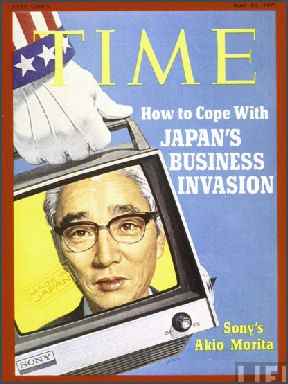
By the 1980s, Japan was closer to American hegemonic status than any nation since World War II. Not militarily—economically. Japanese brands, especially Toyota, had become synonymous with superior quality worldwide. The U.S. auto industry lost a third of its market share in a decade. In semiconductor manufacturing, Japan overtook America in 1986. Exports surged, the trade surplus with the United States widened every year, and Tokyo was becoming a global financial center that could replace New York.
By 1985, Japan was the world’s largest creditor nation. America was the world’s largest debtor. This asymmetry was more than economic—it threatened the hegemonic architecture itself. If the dollar loses confidence and the yen becomes a reserve currency, power shifts at its foundation.
America responded not with military power, but monetary force.
The Plaza Accord: How the Hegemon Stops a Challenger
The numbers tell the real story. The yen rose from 240 per dollar (September 1985) to 150 (late 1986) and below 130 by 1988. In three years, Japanese exporters lost nearly half their pricing advantage. A Toyota executive watching these numbers knew: export margins were evaporating.
The Japanese government and Bank of Japan faced a choice: let the economy slow, or compensate with cheap money. They chose cheap money. The BOJ cut its discount rate from 5 percent to 2.5 percent and kept it there until May 1989. For four consecutive years, the central bank held crisis-level rates while the economy grew above 4 percent annually. The money had to go somewhere. It went into land and stocks.

Three Mechanisms, One Feedback Loop
Japan’s bubble ran on three reinforcing mechanisms that fed each other in a closed loop.
BOJ window guidance: The Bank of Japan informally directed how much commercial banks should lend each quarter. Loan quotas meant banks hunted for any client, and real estate became the preferred collateral because its value only went up.
Keiretsu cross-shareholding: Japan’s corporate system was organized into keiretsu—groupings where a bank, manufacturers, and suppliers held each other’s stock. Cross-holding created artificial demand for equities. Companies bought each other’s securities not for returns but for relationships. As long as everyone inside kept buying, prices rose, and rising prices justified further purchases.
Zaitech: Japanese corporations behaved like hedge funds. They issued convertible bonds on the euromarket, invested the proceeds into tokkin funds that bought stocks and real estate. By 1988, 40–50 percent of some corporations’ profits came not from operations but from zaitech trades.
The loop: cheap loans push prices up, rising prices enable more borrowing, more borrowing pushes prices higher. As long as the music plays, everybody dances.

Numbers That Defy Logic
The Nikkei 225 stood at around 13,000 in 1985. On December 29, 1989, it hit 38,957, tripling in four years. Japan’s stock market traded at a price-to-earnings ratio of roughly 60x, against a U.S. historical average of 15–17x.
By 1989, Japan accounted for 42 percent of total global stock market capitalization, up from 15 percent at the start of the decade.
Real estate was absurd. Land prices rose 302 percent between 1985 and 1991. A square meter in Tokyo’s Ginza district cost approximately $139,000, roughly 350 times more than an equivalent Manhattan location. The grounds of the Imperial Palace were valued higher than all real estate in California. All Japanese land was worth four times all American land, despite Japan being 25 times smaller.
Golf clubs, art, luxury goods—everything became an investment. Golf club memberships sold for up to $3 million. Japanese collectors bought Van Goghs and Renoirs at record prices. Mitsubishi Estate purchased Rockefeller Center, a symbolic monument to American capitalism. The question of whether prices were justified had ceased to exist.

The Collapse
The BOJ raised its discount rate five times: from 2.5 percent (May 1989) to 6 percent (August 1990). The logic was clear—stop the bubble. But bubbles don’t stop gracefully.
The Nikkei fell from 38,921 in January 1990 to 21,902 within a year—a decline of 43 percent. By August 1992, it had fallen to 14,338. In three years, Japan’s stock market lost nearly two-thirds of its value.
Real estate collapsed more slowly due to natural illiquidity. Land prices peaked in autumn 1990; the real decline began in 1991 and continued through the entire decade. By 2001, commercial land prices had fallen 70 percent from the peak. Total wealth destruction in stocks and real estate exceeded 1,500 trillion yen, roughly three times Japan’s GDP at the time.
The zaitech mechanism reversed: with stock prices falling, convertible bond holders didn’t convert, leaving companies stuck with debts and no assets to cover them. Keiretsu cross-shareholding, which had artificially propped up prices during the rise, now slowed selling on the way down, extending the agony.

The Lost Decades
Japan’s economy after the bubble didn’t experience one crisis followed by recovery. It experienced something worse: a slow, quiet death that lasted twenty years.
GDP growth in the 1990s averaged less than one percent annually. Banks were full of bad loans. Instead of cleaning them out, the government allowed zombie banks to survive on state support, and zombie companies to keep operating even though their business models were dead.
Deflation became the norm. When prices fall, consumers delay purchases, companies cut investment, wages stagnate, demand contracts, and prices fall further. Japan was trapped in this spiral longer than any other modern economy.
The Nikkei 225 surpassed its 1989 peak only in February 2024, thirty-four years later. Real estate prices in many regions still haven’t recovered.
The Hegemonic Layer
The standard narrative stops at internal error: the BOJ kept rates too low for too long, regulation was weak, culture encouraged speculation. The internal level is correct. The structural cause runs deeper.
Plaza Accord was a hegemonic weapon. Washington deployed it not for macroeconomic reasons, but because Japan had grown too strong. The trade deficit with Japan was $46 billion in 1985, politically unacceptable to Congress preparing protectionist legislation.
The hegemon faced a choice: allow the challenger to keep growing and risk losing supremacy, or force it to adapt to conditions where growth becomes impossible. The United States chose the second path. Japan lacked the power to refuse because it depended on American security guarantees and access to American consumer markets.
Compared to earlier bubbles: tulip mania was local speculation; the South Sea Bubble was Britain’s internal debt manipulation; railway mania was a consequence of British capital surplus; 1929 was a hegemonic vacuum, with Britain unable and America unwilling to stabilize the system. Japan’s bubble is something new—a deliberate hegemonic action against a rising challenger.
The same logic applies to China today. Trade wars, technology blockades, the CHIPS Act, dollar weaponization through SWIFT: the instruments differ, but the hegemonic function is identical. Slow down the challenger while the hegemon regroups.
What We Never Learned
A central bank fearing economic slowdown can create a greater catastrophe than the one it tried to prevent. BOJ monetary policy from 1986 to 1989 is a textbook case: a short-term problem (yen appreciation) was solved with long-term poison (credit bubble). The same logic repeated in the United States from 2001 to 2006, when Greenspan kept rates low after the dot-com crash and laid the foundation for the housing crisis.
Land and real estate prices can fall for decades. Japan’s experience demolished the assumption that real estate is a safe asset that always appreciates. Price recovery took thirty years and still isn’t complete regionally. Anyone in Vilnius, Dublin, or Barcelona should remember this.
A zombie economy is worse than a fast crisis. Japan’s decision not to clean up its banking system but to keep zombies alive on state support extended stagnation by decades. This lesson applies directly to Europe, where similar mechanisms still operate. A fast, painful restructuring (as the United States executed after 2008) produces better long-term results than a decade of slow dying.
Hegemonic ambition carries a price. Japan never recovered its 1980s dynamism. The country that aspired to become the world’s leading economy became synonymous with slow growth, aging, and deflationary culture. Whether something similar is happening with China will become clear over the next decade.
What Would Disprove This Analysis
If the Plaza Accord had no significant impact on Japanese monetary policy and the bubble would have formed identically without yen appreciation, the hegemonic narrative would weaken. Some economists, including former BOJ officials, argue the bubble was created by internal regulatory failures rather than external pressure. The truth most likely lies between: the Plaza Accord created the conditions, and Japanese institutions made mistakes within those conditions. But the conditions were imposed, not chosen.
Mitsubishi Estate, incidentally, never recovered its money from Rockefeller Center. The company that in 1989 symbolized Japan’s peak power became a symbol of bankruptcy and humiliation. Rockefeller Center still stands in Manhattan — long since returned to American hands. Japan paid three lost decades for growing too fast within the hegemon’s acceptable limits. The lesson doesn’t change: the hegemon’s weapons aren’t only military.
Sources ▸
Data: Nikkei 225 peak 38,957.44 (December 29, 1989), trough 14,338 (August 19, 1992). Japan’s share of global market capitalization: 15% (1980) to 42% (1989). P/E ratio at Nikkei peak: approximately 60x. Yen exchange rate: 240/USD (September 1985) to 150/USD (late 1986) to below 130/USD (1988). BOJ discount rate: 5% to 2.5% (February 1987), held until May 1989; raised to 6% by August 1990. Commercial land prices: +302% (1985–1991), −70% (peak to 2001). Ginza price: approximately $139,000/m² at peak. Total wealth destruction: over 1,500 trillion yen (approximately 3× Japan’s GDP). GDP growth in the 1990s: below 1% annually on average. U.S.-Japan trade deficit: $46 billion (1985). Nikkei recovery to 1989 level: February 2024.
Analysis: Richard Werner, Princes of the Yen (2003). “The Plaza Accord, Asset Bubbles, and The Japanese Lost Decade,” Johns Hopkins BIPR. IMF Working Papers on the cause and effects of Japan’s bubble collapse. Baker Institute Working Paper on the Plaza Accord. IMF World Economic Outlook 2011, Box 1.4: “Did the Plaza Accord Cause Japan’s Lost Decades?”
Context: BOJ window guidance mechanism. Keiretsu cross-shareholding structure. Zaitech corporate financial engineering. Plaza Accord (September 22, 1985) and G5 negotiations. Japanese semiconductor and automotive industry competitive dynamics with the United States.