In late 2006, Casey Serin, a 24-year-old internet entrepreneur from Sacramento, owned eight houses. His annual income was roughly $30,000. Banks approved his mortgage applications without verifying his earnings. Eight times in a row. On one application he declared income three times higher than reality, and nobody checked.
Within two years he lost everything. His story would have been just one of millions, except he documented the entire collapse on a blog called “IAmFacingForeclosure.com” and the internet turned him into a symbol. A symbol of a man the system handed enough rope to hang himself. But Serin wasn’t the problem. The system that mass-produced people like him was.
The 2008 financial crisis is not a story about greed. Greed is a constant, present in every system, every era. The crisis is what happens when every brake on greed is removed simultaneously: regulation, risk assessment, and common sense. When the system designed to protect people starts profiting from them instead.
How the machine was built
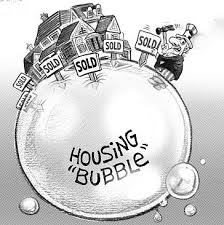
It started with a simple idea: if a bank issues a mortgage and holds it on its balance sheet, the risk belongs to the bank. If the bank packages that mortgage into a security and sells it to an investor, the risk transfers. The bank collects fees and can immediately issue another loan. This process, called securitization, wasn’t inherently dangerous. Freddie Mac issued the first mortgage-backed security (MBS) in 1970. For decades the system worked because loans were sound: borrowers had income, down payments, and credit history.
The break came in the early 2000s, when Wall Street banks ran out of quality loans to package. Demand from investors was enormous: pension funds, insurance companies, European banks were all chasing yield because interest rates had been slashed to 1% after the dot-com crash. The solution was straightforward: if good loans aren’t enough, use worse ones.
This is how subprime was born: loans to people with poor credit histories, no down payments, sometimes no income verification at all. The industry called them NINJA loans: No Income, No Job, No Assets. This wasn’t a secret term. It was standard industry jargon that brokers used among themselves without a trace of shame.
Why did investors buy securities backed by such loans? The rating agencies. Moody’s, Standard & Poor’s, and Fitch gave AAA ratings to products stuffed with subprime mortgages. The mechanism was the CDO (Collateralized Debt Obligation): mix hundreds of loans, slice them into tranches, give the top tranche the highest rating. Mathematical models showed the probability of all loans defaulting at once was minimal. Those models rested on one assumption: that housing prices would never fall nationwide simultaneously. They never had before. Until 2007.
The rating agencies had an obvious conflict of interest: they were paid by the same banks whose products they rated. In 2006, Moody’s revenue from structured product ratings alone accounted for nearly half of the company’s total revenue.
When the house became an ATM
For Americans, a house was always more than shelter. An investment, a sense of security, the American Dream made physical. In the 2000s it became an ATM.
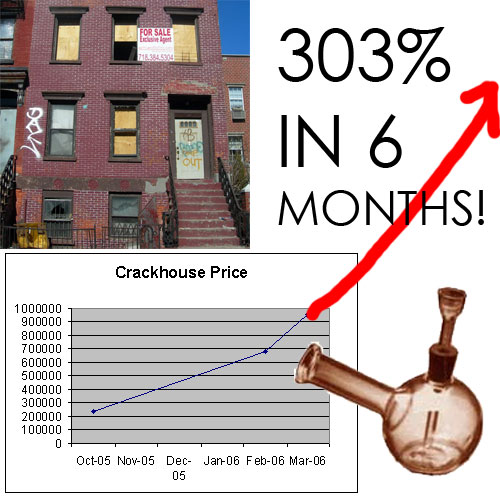
Home prices nearly doubled between 2000 and 2006. Banks offered refinancing: if your house appreciated by $100,000, you could borrow the difference. People did exactly that, for vacations, cars, children’s tuition, credit card debt payoffs. Home equity extraction hit $750 billion per year in 2005. Nearly 5% of America’s entire GDP rested on a single assumption: that prices would keep rising.
The whole chain operated like a conveyor belt. Agents sold houses to buyers who couldn’t afford them. Brokers wrote loans they knew were problematic. Banks packaged those loans and sold them to Europe, Asia, pension funds worldwide. Every participant in the chain collected their commission and passed the risk further down the line. When the music stopped, someone would be holding that risk. But as long as the music played, everyone danced.
The warnings nobody heard
Michael Burry, a former neurology resident turned hedge fund manager, began buying credit default swaps (CDS) against subprime MBS in 2005. He read hundreds of individual loan documents and realized that many borrowers wouldn’t be able to pay even after the first interest rate reset. Burry saw what Wall Street refused to see, because he actually went and read what others couldn’t be bothered to read. His investors tried to pull their money, convinced he was wrong. He wasn’t.
Raghuram Rajan, who later became India’s central bank governor, delivered a paper at the 2005 Jackson Hole conference on growing systemic risk. He argued that financial innovation hadn’t reduced risk but concentrated it in invisible places. The audience was central bankers and regulators. The reaction was almost uniformly hostile. Lawrence Summers called him a “Luddite.”
Brooksley Born, head of the Commodity Futures Trading Commission, tried to regulate OTC derivatives back in 1998, the same market that would destroy AIG a decade later. Alan Greenspan, Robert Rubin, and Larry Summers personally blocked her. The derivatives market remained unregulated. Within ten years it grew to $600 trillion in notional value. Three people who could have prevented the catastrophe chose not to, because they believed the market regulates itself.
The collapse
In the summer of 2007, two Bear Stearns hedge funds invested in subprime MBS announced near-total loss of value. $1.6 billion in capital, effectively zero within weeks. The market flinched, then calmed. “An isolated incident,” the official line went.
By autumn 2007, home prices began falling nationally for the first time since the Great Depression. Subprime default rates surged. MBS values melted. Bank balance sheets, loaded with these products, started showing losses whose scale surprised even the banks themselves.
In March 2008, Bear Stearns, the fifth-largest US investment bank, became insolvent in 72 hours. The Fed arranged an emergency sale to JPMorgan at $2 per share. A year earlier the stock traded at $170. For the first time since the Great Depression, the Fed provided liquidity to a non-commercial bank. A precedent was set.
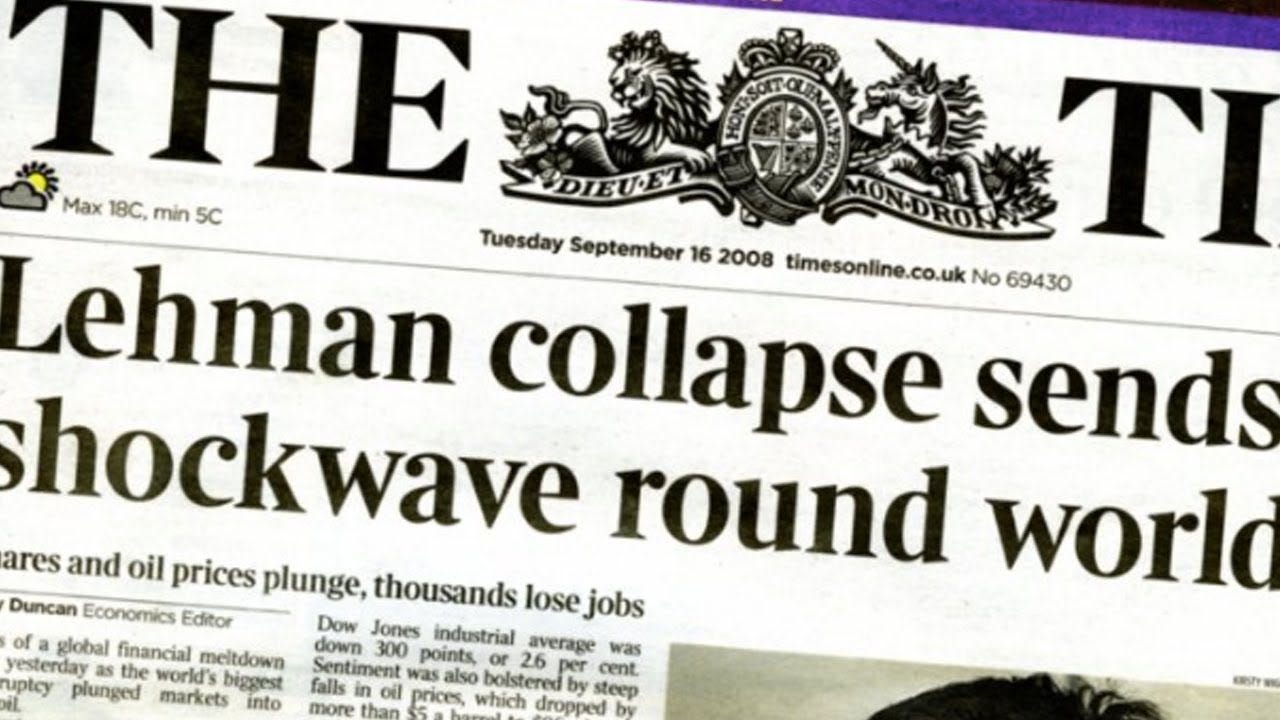
September 15th. Lehman Brothers, the fourth-largest US investment bank, filed for bankruptcy. $639 billion in assets. The largest bankruptcy in American history. The next day, the federal government nationalized AIG, the insurance giant that had sold $440 billion in CDS insuring those same subprime products. AIG didn’t have the capital to cover the losses. If AIG went down, every other party at the table, Goldman Sachs, Deutsche Bank, Société Générale, would lose their insurance simultaneously.
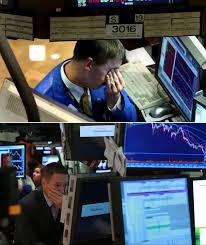
Within two weeks of the Lehman bankruptcy, the global financial system froze. Money market funds “broke the buck,” meaning investors lost money in what they believed was the safest place to park cash. Interbank lending seized up. Credit markets stopped functioning. Companies couldn’t borrow even for short-term operational financing.
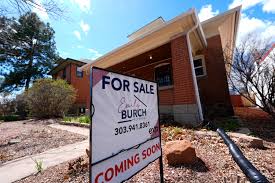
The numbers were merciless. 8.7 million Americans lost their jobs. 3.8 million families lost their homes. Median household net worth fell 39%. Global GDP contracted for the first time since World War II. Iceland went bankrupt. Greece, Ireland, Spain, and Portugal entered debt crises that lasted a decade.
Central banks rewrite the rules
When Lehman fell, the Federal Reserve and the Treasury Department built a new financial architecture in a matter of weeks, one the world had never seen before.
TARP (Troubled Asset Relief Program): a $700 billion bank bailout package. Congress rejected it the first time, markets dropped 7% in a day, and three days later Congress voted again and passed it. The money went to the banks that caused the crisis. Not to the people who suffered it. Bank executives whose institutions had sold clients products they were simultaneously betting against received government money and within a year were paying themselves bonuses again.
The Federal Reserve cut interest rates to zero and kept them there for seven years. When that wasn’t enough, it launched quantitative easing (QE): the central bank directly purchasing bonds from the market, pumping money into the system. QE1, QE2, Operation Twist, QE3, one after another without pause. Between 2008 and 2014, the Fed’s balance sheet grew from $900 billion to $4.5 trillion. A fivefold increase.
Europe followed. The ECB launched its own QE program in 2015. The Bank of Japan had been the pioneer, experimenting with QE since 2001 after its own bubble. By 2008 the approach went global: major central banks coordinated rate cuts and liquidity injections, each in their own market, all at once.
“Too big to fail” went from academic concept to official doctrine. The largest banks knew the government wouldn’t let them collapse. Profits were private, losses public. Moral hazard wasn’t a side effect. It became a feature of the system.
What we learned
The Dodd-Frank Act, passed in 2010, ran 2,300 pages of financial regulation reform. The Volcker Rule restricted banks from proprietary trading. Stress tests became mandatory for the largest banks. The Consumer Financial Protection Bureau was created to shield consumers from predatory lending. Capital requirements rose from roughly 7% to 12-13%, meaning the system could absorb larger losses before breaking.
Some of the lessons were real. The subprime lending machine was dismantled. NINJA loans became history. The securitization market shrank and turned more conservative. Rating agencies, while not radically reformed, operated with more caution. A first blow after a crisis always leaves a scar, and some of the market’s participants remember that scar.
What we didn’t learn
The debt didn’t disappear. It moved.
The private sector deleveraged: households, banks, and corporations spent the decade after the crisis methodically reducing debt. Governments took on that leverage instead. US federal debt stood at 64% of GDP in 2008. By 2024, it exceeded 120%. The debt wasn’t eliminated. It was transferred from private balance sheets to public ones, and now it’s paid by all taxpayers regardless of whether they ever owned a stock.
QE was supposed to “temporarily” stabilize markets. Fifteen years later, central banks still can’t fully normalize policy. Every attempt to raise rates or shrink the balance sheet ends in market stress: the December 2018 selloff, the 2019 repo crisis, the 2020 COVID response with yet another round of QE, the 2023 regional banking crisis. The system became addicted to cheap money. Try to take it away and see what happens.
Asset price inflation is the most underreported consequence. QE money didn’t flow into the real economy, it flowed into financial assets: stocks, bonds, real estate. The S&P 500 rose more than 600% from its 2009 low to end of 2024. Home prices in many cities exceeded their 2006 peak. Asset owners got richer. Those without assets fell further behind. The widest wealth gap in generations didn’t appear from nowhere, it was engineered by specific central bank decisions.
Moral hazard became a system feature, not a bug. Every crisis since 2008 ends with the same playbook: central banks cut rates, release liquidity, rescue markets. Investors know this and act accordingly. The “Fed put,” an unofficial but very real promise that the central bank won’t let markets fall too far, encourages ever-greater risk-taking because everyone knows the rescuer will come if things go wrong. And the cycle repeats, only the scale grows.
The hegemonic context
Why could the United States print $4.5 trillion and not collapse?
Dollar hegemony. The US currency is the world’s reserve currency. Central banks hold dollars. Oil is traded in dollars. International debts are denominated in dollars. When the Fed prints money, demand for the dollar exists globally, and the resulting inflation distributes across the entire world, not just within the US. The hegemon can socialize its losses on a planetary scale. Other countries don’t have that luxury.
During the crisis the Fed opened swap lines to foreign central banks: the ECB, Bank of England, Bank of Japan, the Swiss. It supplied dollars to the entire world. On one hand, this stabilized the global system. On the other, it demonstrated who actually controls the world’s financial bloodstream. Not the market. Not international institutions. One central bank in Washington.
In countries without the reserve currency privilege, the crisis looked different. Iceland went bankrupt. Greece lost its sovereignty, with the troika dictating its budget. Ireland, Spain, and Portugal received bailout packages with strict conditions and a decade of austerity. Latvia, having pegged its currency to the euro, lost 25% of its GDP and experienced mass emigration whose consequences are felt to this day. The hegemon had the printing press. The rest of the world did not.
This is the context most analyses of the 2008 crisis miss. The crisis was created in the US, exported worldwide through securitized products, and resolved using tools available only to the dollar hegemon. Cost was distributed globally. Profit was concentrated.
What would disprove this analysis
If central banks managed to fully normalize interest rates and their balance sheets without triggering market stress, it would mean QE truly was a temporary measure, not a structural shift. If government debt declined as a percentage of GDP without a recession, it would disprove the thesis of debt transfer. If wealth inequality narrowed despite QE policies, it would break the link between central bank interventions and wealth concentration.
So far, every one of these indicators points in the opposite direction.
This cycle is personally familiar to me. At twenty-three, encouraged by my mother and my boss at the time, I bought my first apartment with a mortgage. Right at the peak. I slid through the crisis on my bare skin, and no macroeconomic theory replaces that feeling. Maybe that’s why I look at bubbles and the hype floating in the air more cautiously than most. When you’ve been inside the statistics yourself, the numbers stop being abstract.
Casey Serin lost eight houses. 3.8 million American families lost their only one. The banks that built the machine received government money and were back on their feet within a year. Not a single major bank executive went to prison. Goldman Sachs paid a $5 billion fine in 2016, their annual revenue that year was $30 billion.
The crisis ended. The mechanics that created it, debt transfer, central bank intervention, moral hazard as official policy, are still running. Only the scale is larger. And every time the system starts creaking again, the answer is the same: print more.
Sources
Financial Crisis Inquiry Commission, Final Report, 2011 · Michael Lewis, “The Big Short”, 2010 · Ben Bernanke, “The Courage to Act”, 2015 · Federal Reserve Economic Data (FRED) · S&P/Case-Shiller Home Price Index · U.S. Treasury TARP data · IMF World Economic Outlook, 2009-2010